

Artemis II Crew Adapts to Unique Sleep in Orion Spacecraft
The four member crew of the Artemis II mission — Reid Wiseman, Victor Glover, Christina Koch, and Jeremy Hansen — are preparing for their journey around the Moon aboard the Orion spacecraft. As they share insights into daily life in deep space, one of the most intriguing revelations concerns their highly unusual sleeping arrangements, which one crew member jokingly described as sleeping "like a bat."
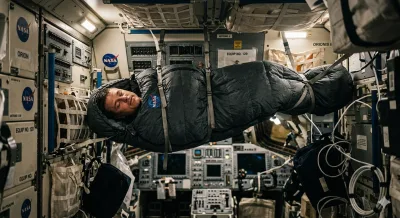
Unlike the comfort of a bed on Earth, the microgravity environment inside Orion presents unique challenges for rest. With no traditional beds available, astronauts must improvise their sleeping spots and secure themselves to prevent drifting. This means attaching sleeping bags to various surfaces within the spacecraft's compact cabin.
Improvised Sleeping Quarters in Microgravity
Each astronaut has found a personal, often unconventional, location to rest. One crew member reportedly chose the docking tunnel, floating while strapped into their sleeping bag. Other spots include wedging into a small corner of the capsule, stretching out across a seat, or even positioning oneself beneath the instrument panels. These inventive solutions highlight the ingenuity required to live and work in space.
The primary reason for these peculiar positions is the absence of gravity. In microgravity, there is no inherent sense of up or down, allowing astronauts to sleep in virtually any orientation. However, left untethered, they would simply float around the cabin, potentially bumping into equipment or fellow crew members. Securing sleeping bags to interior walls or seats ensures a stable and safe resting period.
Challenges and Realities of Space Sleep
Despite mission schedules typically allocating around eight hours for sleep each day, adjusting to the unique environment and the sheer excitement of spaceflight can make getting quality rest challenging, especially during the initial days of a mission. The limited space inside the Orion crew module further complicates matters, as it must simultaneously function as a cockpit, workspace, dining area, and sleeping quarters for all four astronauts during their roughly 10-day journey.
These glimpses into the daily routines of the Artemis II crew offer the public a rare and fascinating look at the realities of living and working beyond Earth, showcasing both the marvels and the practical adaptations required for human deep space exploration.